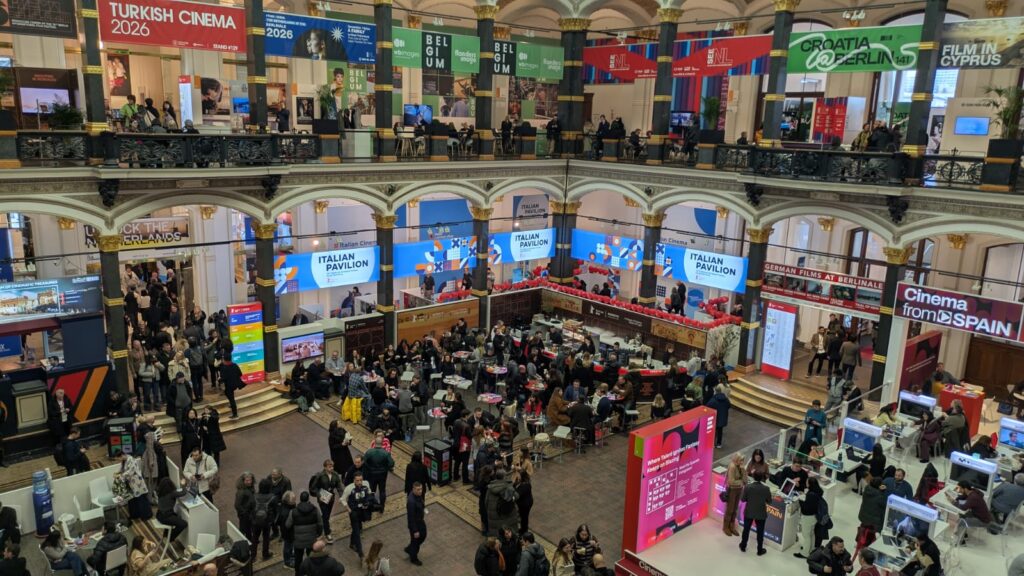
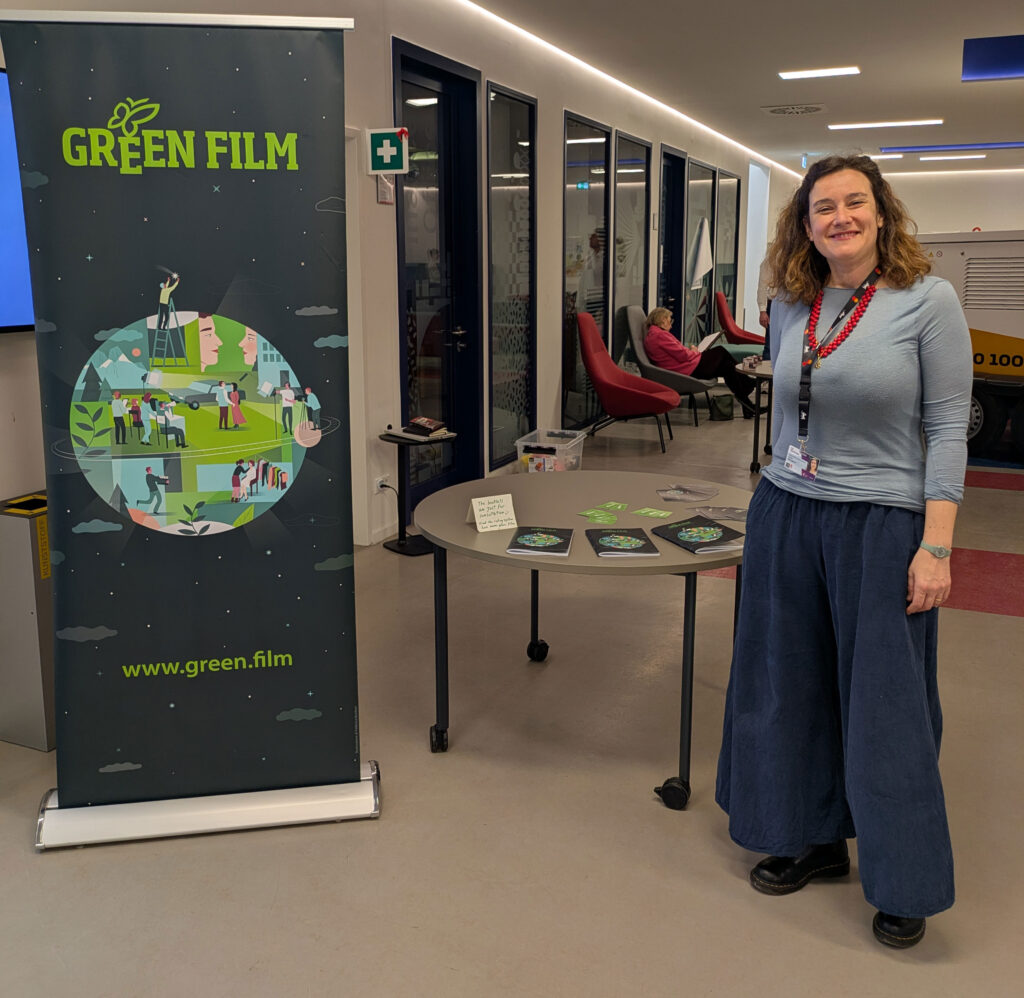
Green Film took part in the European Film Market(EFM), happening in Berlin from 12 to 18 February 2026, bringing its commitment to sustainable audiovisual production to one of the world’s most influential industry events. As one of the key pillars of the Berlinale, the EFM gathers thousands of professionals each year and serves as a major international hub for film business, networking, and forward-looking discussions on the future of the sector.
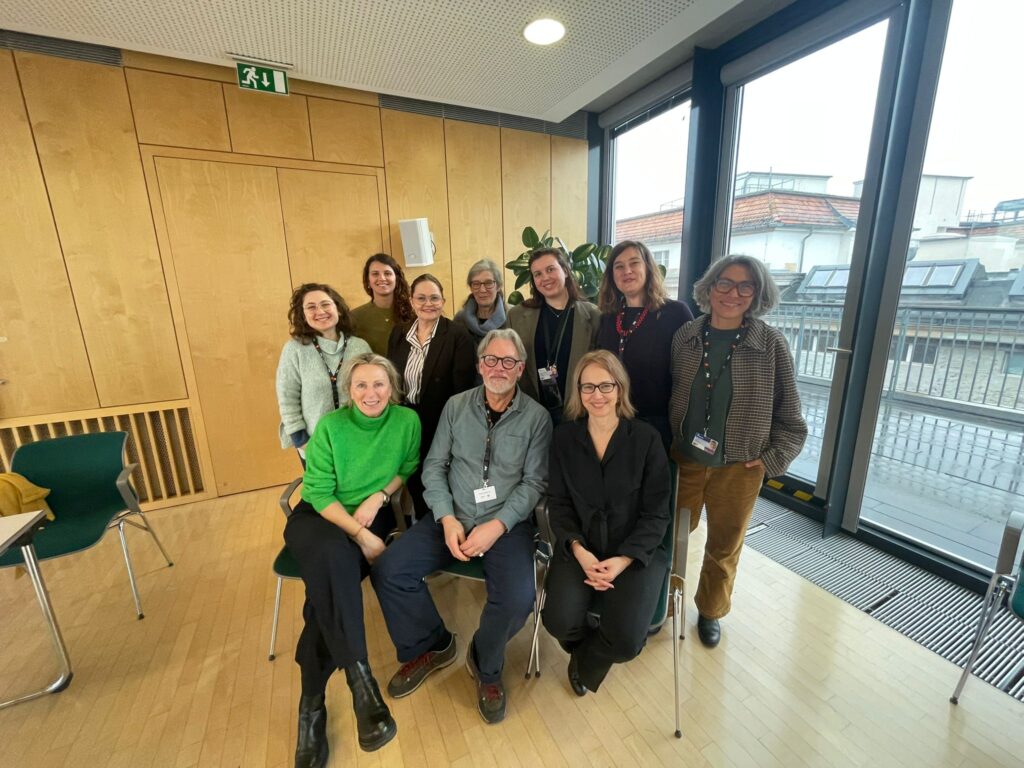
CineRegio Sustainability Subgroup Meeting – A Growing Collective Commitment – On Friday, 13 February, Green Film chaired the meeting of the CineRegio Sustainability Subgroup. CineRegio is the network of over 53 regional film funds from across Europe. The Sustainability subgroup fosters collaboration across borders by facilitating exchange, dialogue, and joint initiatives aimed at driving meaningful environmental and social change in film production. This year, the meeting was marked by a strong and encouraging signal: 35 CineRegio members have now signed the Manifesto for Sustainable Filming, reinforcing a shared European ambition to integrate sustainability into all stages of audiovisual creation.
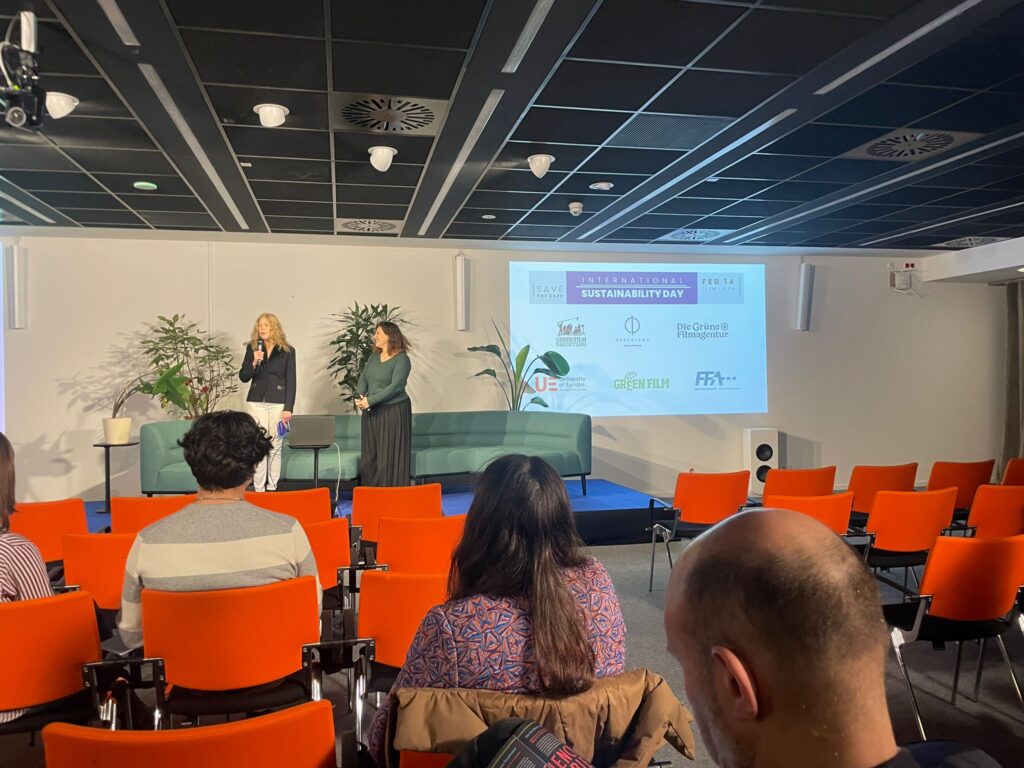
The day featured a rich series of panels, talks, screenings, and showcases, exploring multiple dimensions of sustainability in the audiovisual field, including energy-efficient power supplies on set, circular economy models for film production and environmental impact of AI, gaming, ICT, and animation. The event highlighted the approaches emerging across Europe and the shared motivation to accelerate ecological transition within the industry.
Meetings With Producers and Industry Professionals – Throughout the EFM, Green Film met with numerous producers interested in learning how to make their projects more sustainable using the Green Filmprotocol. These exchanges confirmed the growing international curiosity and demand for practical and reliable tools to reduce environmental impact on set.
Strengthening Partnerships and Advancing Collaborative Projects – The market also provided an important opportunity to meet various partners and reinforce ongoing collaborations.
Green Film leaves the EFM with renewed energy, stronger alliances, and a shared determination to support the audiovisual sector in its transition towards a more sustainable future.